
Table of Contents
Knowing how to teach kids to read can feel overwhelming, but it does not need expensive programs. Reading grows from small daily moments like bedtime stories and rhyming games. If you are wondering how to teach preschoolers to read, the early steps look more like play than lessons. Many parents also ask, when do most kids learn how to read? Most children begin reading simple words between ages five and seven.
This guide shares simple, research backed ways to help your child build those skills at home, one step at a time.
When Should I Start Teaching My Child to Read?
You can start building reading skills from birth, long before formal lessons begin. Talking, singing, and sharing picture books all teach your baby that words carry meaning. When should I start teaching my child to read in a more formal way? Most experts suggest introducing letters and sounds around ages three to four, as long as your child shows interest and the activities stay playful.
Look for these signs of readiness:
- Enjoys being read to and asks for favorite books
- Holds a book the right way up and turns pages
- Points to pictures and talks about them
- Recognizes the letters in their own name
- Asks what a word or sign says
If your child resists, take a break and try again in a few weeks. Pressure can turn reading into a chore, and a happy reader will always go further than a rushed one.
What Age Do Kids Learn How to Read?
What age do kids learn how to read? There is no single answer, because every child develops at their own pace. Most children start decoding simple words in kindergarten or first grade, at about ages five to six, and many become fairly fluent by age seven or eight. Some pick it up earlier, and others need more time.
Being a little behind a classmate is rarely a cause for worry. However, if your child still struggles with letter sounds or rhyming by the end of first grade, talk to the teacher or your pediatrician. Early support makes a big difference.
Simple Ways to Help Your Child Learn to Read
The best tools to learn how to read for children are often the simplest ones: books, conversation, and a little patience. Try these seven steps at home.
1. Read Aloud Every Day
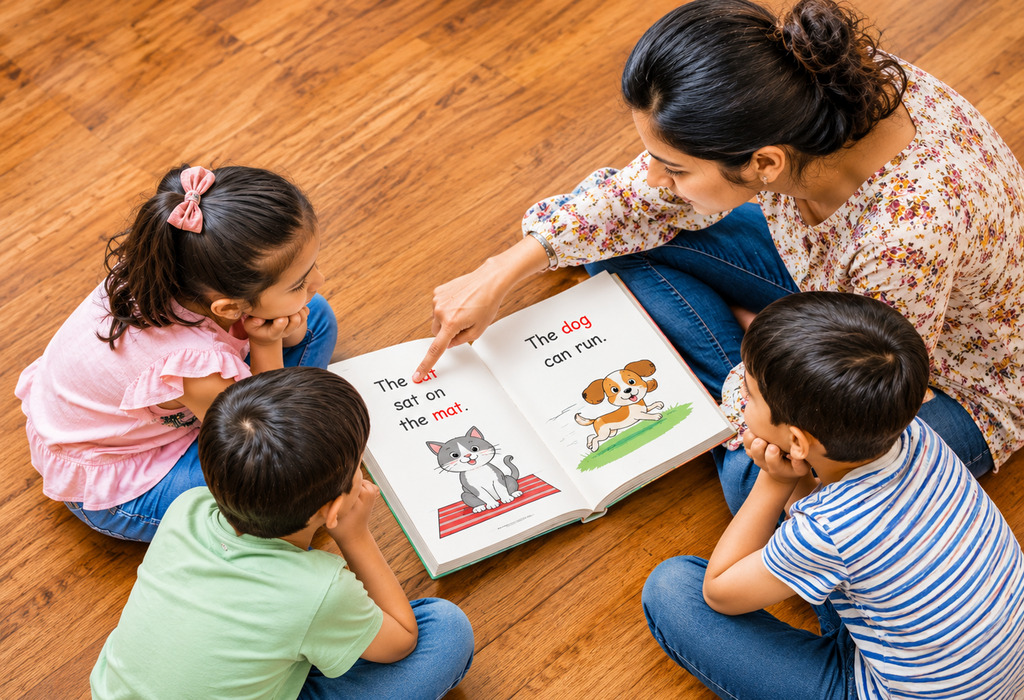
Spend fifteen to twenty minutes reading together each day. Let your child pick the book, point to the words as you read, and ask questions like, “What do you think happens next?” Repeat favorite stories as often as your child asks. Repetition builds vocabulary, memory, and confidence.
2. Play With Sounds and Rhymes
Before children can read words, they need to hear the sounds inside them. Sing nursery rhymes, clap out syllables, and play games like, “What rhymes with cat?” or “What sound does ball start with?” These quick games take only a few minutes and prepare your child for phonics.
3. Teach Letter Names and Sounds
Start with the letters in your child’s name, since they already feel meaningful. Teach the sound each letter makes, not just its name. Magnetic letters, tracing letters in sand, and alphabet puzzles keep practice hands on. Introduce two or three new letters a week and review often.
4. Blend Sounds Into Words
Once your child knows several letter sounds, show how to blend them into simple three letter words like cat, sit, and dog. Stretch each sound slowly, then say it faster until it becomes a word. Short books made of simple, sound it out words give children a chance to practice this skill with success.
5. Build a Sight Word Collection
Words like the, and, is, and was do not always follow sound rules, so children learn them by sight. Write two or three words on cards, practice them for a week, then add new ones. A small word wall on the fridge or bedroom door makes these words easy to spot every day.
6. Surround Your Child With Print
Label household items, read signs on walks, and let your child help write the grocery list. Encourage simple drawing and writing, because writing and reading grow together. Even a scribbled note to grandma shows your child that words have a real purpose.
7. Keep It Fun and Pressure Free
Turn practice into a treasure hunt for letters, a rhyming race, or a silly voice story time. Praise effort instead of perfection, and stop when your child gets tired. Children who enjoy reading are far more likely to keep reading for life.
How to Teach Your Kindergartener to Read
If you want to know how to teach your kindergartener to read, build on the steps above with a short, steady routine. Ten to fifteen minutes a day is plenty at this age.
Follow this simple routine each day:
- Review a few letter sounds to warm up
- Practice two or three sight words
- Let your child read a short book aloud while you listen
- When your child gets stuck, ask them to sound out the word first, then check the picture for clues, and only then offer help
This teaches your child to solve problems instead of waiting for an answer.
Kindergarten classrooms rely on songs, games, and hands on activities, so borrow those ideas at home. Keep a small basket of books at your child’s level, and celebrate every new word they can read.
Tips to Keep Reading Practice on Track
A few small habits keep reading practice steady and stress free, whether you are working with a preschooler or a kindergartener. Use these tips as a quick checklist:
- Keep sessions short and stop while your child is still happy.
- Choose books that are slightly easy, so your child feels successful.
- Stay calm about mistakes and gently model the right sound.
- Check in with your child’s teacher to see which skills the class is working on.
Teaching a child to read is a gradual journey that starts with a love of stories and grows through sounds, letters, and plenty of practice. Simple habits like reading aloud daily, playing rhyming games, and practicing a few sight words add up faster than most parents expect. Every child learns at a different pace, so follow your child’s lead and keep each session short and happy. If you notice ongoing struggles, ask your child’s teacher or doctor for guidance early. With patience, praise, and consistency, your child will soon be reading with confidence.